What you get
- One source of truth across projects, commercial, and site teams
- Less spreadsheet rework and fewer reconciliation disputes
- Leadership visibility on cost, cash, and progress in PKR
Construction ERP · Pakistan
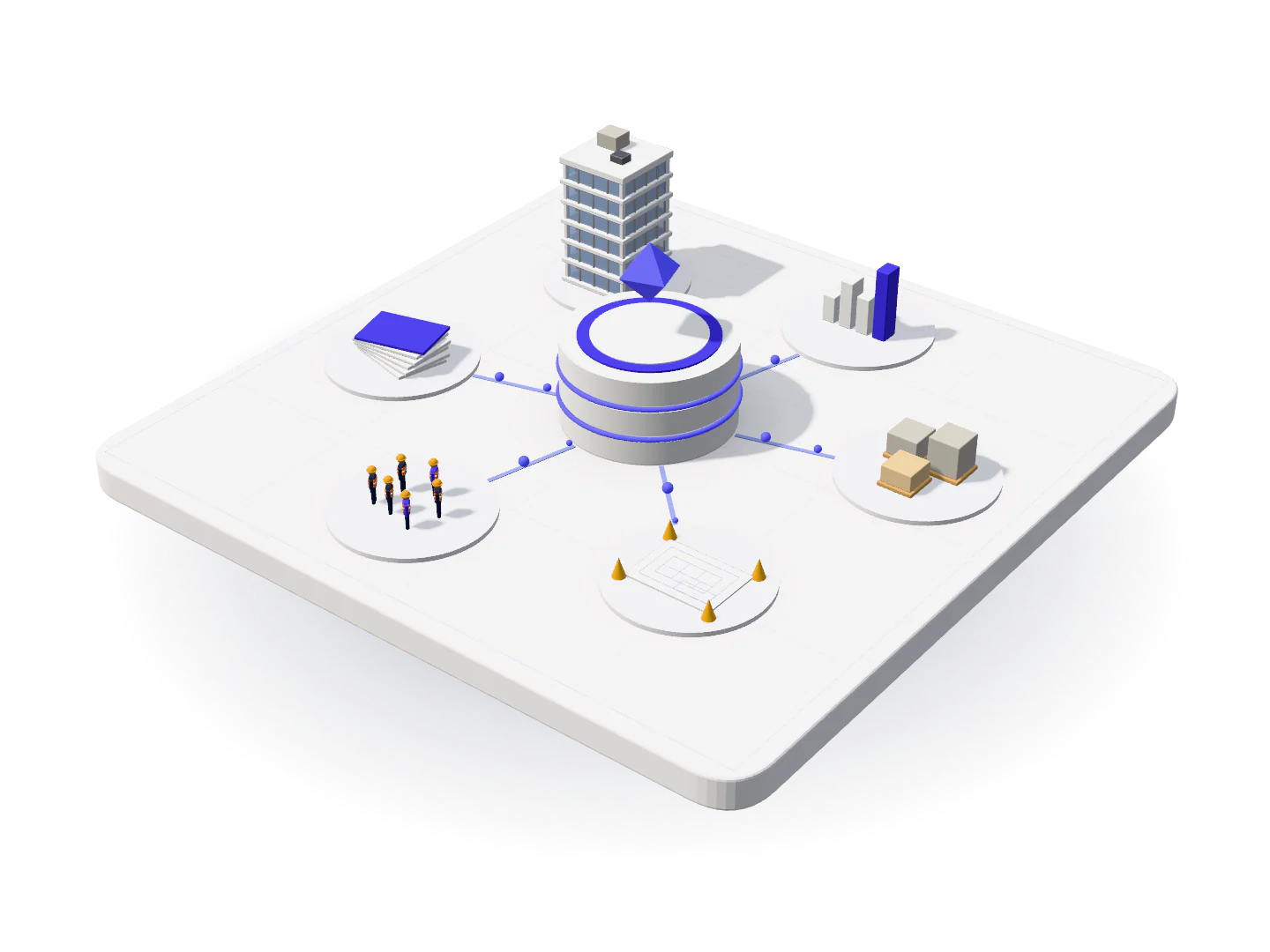
Smart Construction is a cloud ERP built only for construction: projects, PKR commercial, procurement, labour, payroll, and site operations in one system, not a generic ERP bent into shape.

Overview
ERP means one thing in practice: the number you see in a report is the same number somebody entered when the work happened, and nobody re-keyed it in between. Most Pakistani construction companies do not have that. They have an accounting package that knows about vouchers, a set of project spreadsheets that know about progress, a labour register on paper, and a procurement process that lives in a WhatsApp group. Each is defensible on its own. Together they guarantee that every management question becomes a reconciliation exercise.
A construction ERP closes those gaps by organising everything around the project. Purchasing, site activity, labour, and client billing all belong to a job from the moment they are recorded, so by the time a figure reaches a report it has been entered once, by the person closest to the work, and nobody has had to join it up by hand.
The reason this matters more in construction than in most industries is that construction cost is only knowable in arrears unless you deliberately capture commitment. A trading business knows its position from its bank balance and its stock. A contractor with four sites has committed cost sitting in orders already placed, work in progress not yet certified, retention held by three clients, advances paid to eleven suppliers, and a labour bill that will land at month end. None of that is visible from a bank statement, and all of it decides whether the year was profitable.
Smart Construction is a cloud ERP built only for that problem, in Pakistan, in rupees. It is not a general business ERP configured towards construction, and it is not an international construction platform localised afterwards. Every plan carries the full system, so the capability you need in year two is already in the subscription you buy in year one.
Capabilities
Everything below is included on Starter, Growth, and Enterprise. Plans differ only on active project and user limits.
Every cost, document, and site entry belongs to a project from the day it is recorded. That is what makes project profitability a fact rather than an allocation exercise at year end.
Purchasing is tied to the project budget, so what you have committed is visible before the supplier’s invoice arrives, while overspending is still a decision rather than a fact.
Client bills in PKR that follow how Pakistani contracts are actually certified and paid, on your own letterhead, so work agreed on site is not left off the next bill.
Every kind of worker, from daily-wage crews to salaried staff, with wages landing on the project that used them rather than disappearing into overheads.
What happens on site is recorded against the project on the day it happens, so field activity can be checked against what was bought and billed instead of running in parallel to it.
Live dashboards and reports, updates on WhatsApp, and an AI assistant for quick answers. Month-end becomes retrieval rather than production.
Before and after
The same work, run the way most contractors run it today and the way it runs on the platform.
Use cases
Recognisable scenarios from construction businesses operating in Pakistan.
Benefits
When materials, labour, subcontract, and overhead all belong to a project from the start, margin is measured rather than estimated.
What you have committed shows against the budget before the invoice arrives, so over-commitment is caught while it is still a decision.
Information entered once is used everywhere it is needed, which removes both the effort and the discrepancies of re-keying.
Reports come from live records with a history of changes behind them, so month-end is retrieval rather than production and audit queries are quick to answer.
Every module is on every plan, so scaling costs capacity rather than another purchase decision.
Built for how Pakistani contracts actually run: rupee billing, retention, and daily-wage labour are normal practice here rather than configuration workarounds.
Terminology
Plain definitions of the terms Pakistani contractors and consultants use day to day.
Questions
Still have a question?
Ask our team during Pakistan business hours, in English or Urdu.
+92 333 2466662Chat on WhatsAppConstruction ERP brings project management, commercial, procurement, HR and payroll, and site operations into one system, so every team works from the same numbers instead of separate spreadsheets.
Yes. It is built exclusively for Pakistani contractors and developers, with PKR-native billing and payroll, rather than a generic accounting or trading ERP adapted to construction.
Published plans start at PKR 10,000/month, or 20% off on annual billing, plus a one-time setup fee. Every plan includes the full platform; only project and user limits change. See the pricing page for full PKR amounts.
Yes. It is a cloud SaaS ERP with web and mobile access, so site and head-office teams work from the same records anywhere.
Accounting software records what has already happened financially. A construction ERP also covers commitment, progress, purchasing, labour, and site activity, and ties all of it to projects. That difference is what lets you see a project going wrong while there is still time to act.
Most customers run the platform as their operational and commercial system of record and continue to file statutory accounts through their existing arrangement, using exports from the platform. The reporting that drives decisions comes from here, because this is where the project detail lives.
Most customers run their first billing or attendance cycle within a few weeks. Setup, loading your opening position, and training for each role are covered by the one-time setup fee rather than billed as a separate consulting engagement.
Yes. Each company in the group keeps its own projects, accounts, and branding for clean statutory reporting, and leadership can see across all of them for a consolidated portfolio view.
Book a walkthrough built around your own workflows, or compare PKR plans before you subscribe.
Call +92 333 2466662 during Pakistan business hours, or book online.